do your cutting as it is intended, and you will have way less issues.
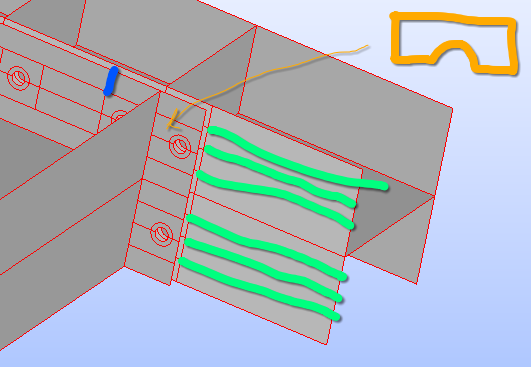
you should divide your geometry into quad surface, this means faces with only 4 vertexes.
do your cutting as it is intended, and you will have way less issues.
you should divide your geometry into quad surface, this means faces with only 4 vertexes.
A word of explanation. The model was prepared for Femap and the division is good enough for meshing in Femap. As you mentioned I still need to work on the geometry to be able to mesh it in Salome. Which brings another question, but I’ll leave that for another topic.
So is there any other way than going back and forth between smesh and geom modules to add groups for submesh?
you are not working with femap. you are asking how to do it easily in salome. each software has different workflows. you can automatize this in python by scripting and keep the geometry as it is but that takes a lot of knowledge in the subject. in salome you divide appropietly the geometry and it will be quite fast to set a global refinement and create the respective groups for mesh refinement.
So is there any other way than going back and forth between smesh and geom modules to add groups for submesh?
the classic workflow is to prepare everything in geom before going to smesh. (eventhought you can do it, as you are doing now)
I won’t be working in Femap any soon, I want to do all the preparations in Salome. But since it’s somehow different to what I’m used to I feel I’d need a little bit of training.
Hi,
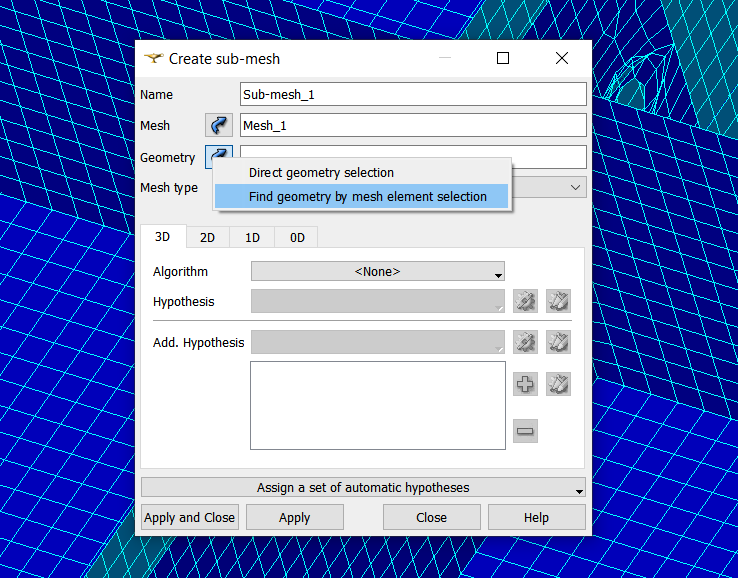
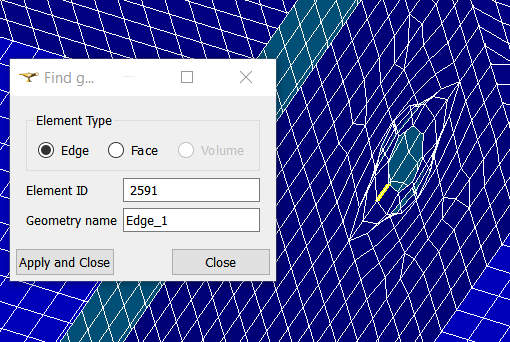
in Create sub-mesh dialog box, press the Geometry arrow, then *Find geometry by mesh element selection*. You will be able to select an edge directly in the VTK viewer without having going back to GEOM (it does not work if the main shape of the mesh is coming from SHAPER though).
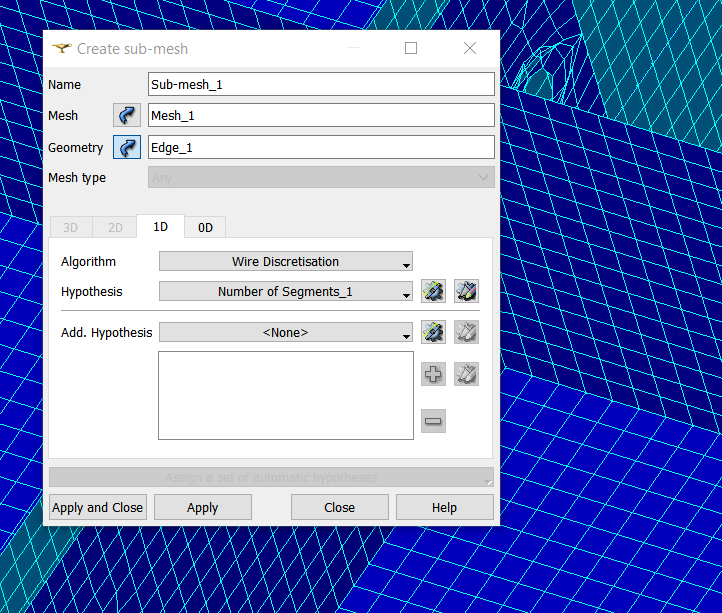
Edge_1 (or incremental id) will be automatically created in GEOM. Continue the sub-mesh creation by adding the wanted hypothesis.
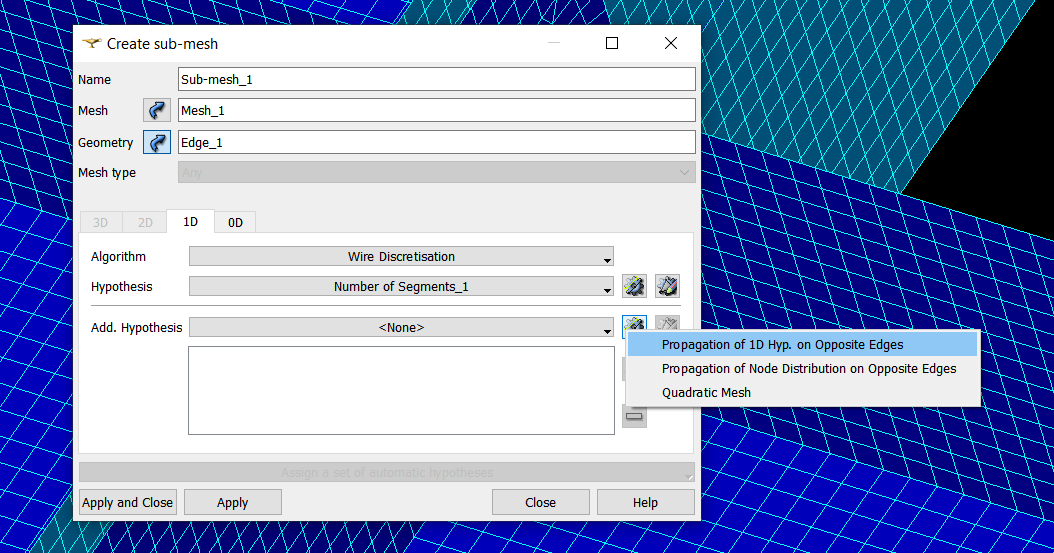
Don’t forget to add Propagation of 1D Hyp on Opposite Edges to set the same number of nodes on opposite edges if you want to get quadrangles. If you use a Local length hypothesis, use Propagation of Node distribution on opposite edges instead.
Christophe
Thank you Christophe. It seems that I need a good training of meshing in Salome…